











Leonardo da Vinci’s DNA is potentially in the hands of scientists
This finding could open new possibilities for art authentication.

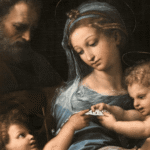
The Leonardo da Vinci DNA Project team analyzed samples of a red chalk drawing that may have been attributed to the famous polymath, as well as letters written by one of his known cousins. Buried in this jumble of genetic material were human Y chromosome sequences that belong to the same genetic group that shared a common ancestor in Tuscany, the region where da Vinci was born. Specifically, they belong to the broad E1b1b lineage on the Y chromosome, which is passed down from father to son.

The findings are in a preliminary publication, and further research is needed to confirm whether this is truly da Vinci’s genetic information, obtained more than 500 years ago.
The research team says the paper provides “clues not conclusions,” but it suggests that it may be possible to extract informative biological material from expensive and fragile historical artifacts. An innovative technique developed by scientists can extract DNA from humans, plants, bacteria, fungi, animals, viruses, and parasites from wax seals on ancient letters and from the absorbent paper itself.
“Together, these data demonstrate the feasibility as well as limitations of combining metagenomics and human DNA marker analysis for cultural heritage science, providing a baseline workflow for future conservation science studies and hypothesis-driven investigations of provenance, authentication, and handling history,” the team writes in their paper.
In a new preliminary study, researchers explain how they gently cleaned up a suspected da Vinci chalk drawing called the “Holy Child”. Then, using advances in next-generation sequencing, they were able to extract biological information, including information about orange trees grown in the Medici gardens in Tuscany, and low-quality human DNA.
It is unknown who the DNA belongs to. It could be from the Renaissance artist himself or from those who later handled the painting.
Some of the DNA clearly contained Y-chromosome markers, indicating that the genetic information originated from a male. This individual appears to have belonged to a clade common in the Mediterranean region, particularly central and southern Italy, including Tuscany, where Leonardo came from.
These findings hint at a common da Vinci-related origin for the object, which is worth further investigation. The team now wants to compare it to other works and objects known to have belonged to da Vinci. These finds will then need to be compared with confirmed living descendants of the Renaissance artist.
The ultimate goal of the DNA project is to confirm da Vinci’s eternal resting place and reconstruct his centuries-old genome.
According to the project’s chair, Jesse Ausubel of The Rockefeller University, “even if confirmed DNA matches with Leonardo are still ahead, success is now inevitable in the sense that a threshold has been crossed.”
For nearly 10 years, researchers on the project have been working to trace da Vinci’s lineage back through previous and subsequent generations. They recently found several living descendants and a family line that goes back as far as 1331.

Da Vinci’s own remains are buried in a small chapel in the Loire Valley, France, but not all historians are convinced that this is his final resting place. Researchers are currently excavating the da Vinci family tomb in Italy to obtain genetic information from his relatives.
Evolutionary biologist S. Blair Hedges, who was not involved in the study, told Science journalist Richard Stone that the Leonardo DNA project has “about the same challenging target” as ancient DNA research, but the steps the researchers have made are impressive.
So, we may have Leonardo’s DNA. What’s next?
It’s worth noting that all of this is only possible because of the rapid advances in modern genetics, which allow scientists to scan tiny fragments of DNA and determine their source. This simply wasn’t possible until the late 20th century.
The “shotgun genome” sequencing technique used in this study allows scientists to sequence the entire genetic material of a sample at once, rather than targeting one gene at a time. Over the past few decades, researchers have also amassed vast genomic databases, allowing them to quickly compare their results.
Sequencing Leonardo da Vinci’s genome could open up a whole host of possibilities. Obviously, it could help to clarify physical characteristics, such as the inventor’s eye and hair color, as well as his height. But it could also, more poetically, help answer one theory about his abilities.
Some art historians believe that Leonardo da Vinci may have had an innate ability to “see” more frames per second than the average person. If that’s true, analyzing his genome could help to understand whether there is a genetic trait behind this ability.
And the possibilities aren’t limited to da Vinci. If geneticists can sequence his genome, researchers could theoretically look for the same biological signature in other works of questionable provenance to determine whether they were indeed touched by his hands.
There’s no reason why the same principle couldn’t be applied to other artists. This ability to authenticate artworks could significantly reduce the $4 billion to $5 billion in art fraud reported each year.
Moving forward, Gonzalez-Juarbe says, “he’s hopeful this report will increase their odds of getting access to analyzing additional da Vinci drawings and letters. The end goal of all of that, he says, is to piece together a fuller picture of individuals who left an outsized mark on history.”
”We would like to learn more about his story, about his lineage, and about him as a visionary,” Gonzalez-Juarbe adds.
Credits:
Image: