












Earth satellite networks are one step away from global catastrophe
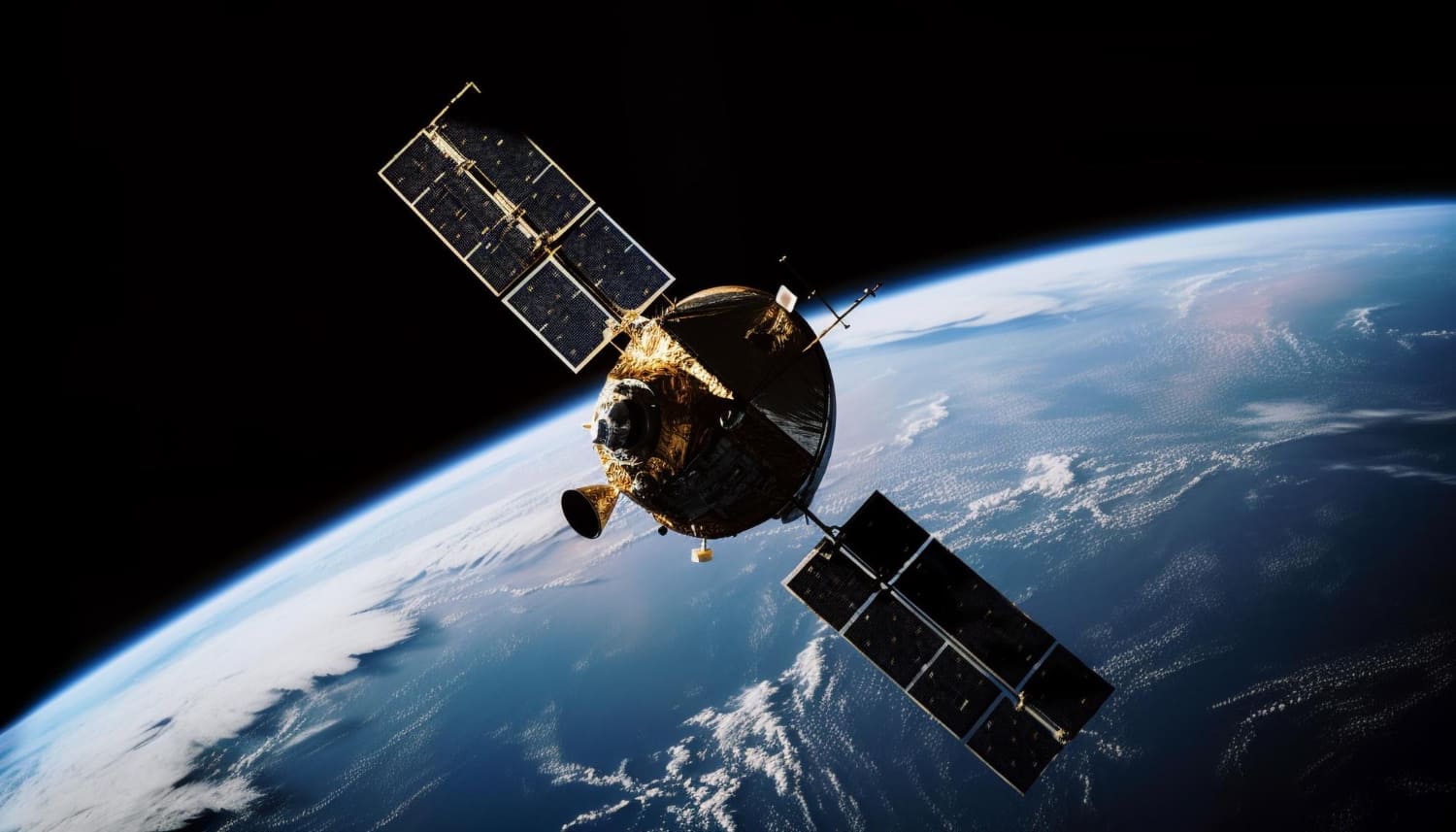
One catastrophic event could cause all of Earth's satellites to crash in just a few days.


Humanity has invested a lot in satellites, not just in terms of money. Yes, the most expensive satellites can cost close to a billion dollars, but the greater investment comes in our reliance on this orbiting technology.
Television broadcasts, navigation systems, weather forecasts, the internet, and numerous forms of financial exchanges all rely on satellites to work.

If all of Earth’s satellites were to suddenly go down, international communications systems would start to fail, transportation would grind to a halt, clocks would go out of sync, and global supply chains would collapse.
It’s a scenario fit for a disaster movie, but unfortunately, it’s also a very real threat. Just one solar storm or one software glitch could wipe out all of the satellites in less than a week.
A group of scientists from Princeton University and others, led by Sarah Thiel (a graduate student at the University of British Columbia), has published a study comparing satellite mega-constellations to a house of cards: seemingly stable until one unexpected blow brings everything down.
The orbit is filling up rapidly
The number of satellites in orbit is growing exponentially, especially since the launch of SpaceX’s Starlink satellites. As of January 2026, there were about 15,000 satellites in orbit, about two-thirds of which are Starlink.
As space around Earth becomes increasingly dense, satellites must perform collision avoidance maneuvers more frequently. It’s gotten to the point where SpaceX alone performs collision avoidance maneuvers every two minutes.
But if SpaceX or any other satellite operator were to lose contact with their technology, say, due to a solar storm or software glitch, they wouldn’t be able to perform the necessary avoidance. That could set off a domino-like series of crashes that would take out all of Earth’s satellites within days.
The most dangerous scenario is solar storms
The biggest threat is not everyday errors, but rare, extreme events like powerful solar storms. They affect satellites in two ways:
- Atmospheric expansion – during a storm, the upper layers of the atmosphere heat up and expand, increasing aerodynamic drag. Satellites lose altitude faster, have to burn more fuel for corrections, and their position predictions become inaccurate.
- Communications and navigation disruptions – Strong geomagnetic storms can temporarily disable communications, GPS signals, and satellite computers, leaving them uncontrollable targets in crowded orbits.
Example – the “Gannon” storm of May 2024: more than half of the satellites in low orbit were forced to urgently adjust their trajectories.
New indicator – the CRASH Clock
Researchers have developed a new indicator – the CRASH Clock (Catastrophic Risk Assessment for Satellite Hyper-congestion Clock), which shows how much time would remain before a serious collision if all satellites suddenly lost their ability to maneuver:
- 2018 (before the megaconstellation boom) – ~121 days.
- June 2025 – just 2,8 days.
- If control is lost for only 24 hours – ~30% chance of a serious collision with debris formation.
For comparison: the 1859 “Carrington” storm (the most powerful on record) could disrupt the system for weeks or months – well beyond the 2-3 day “safety window”.
Why is this a global risk?
Mega-constellations provide global high-speed internet, connectivity in remote areas, support for rescue operations, and the growth of the space economy. But they have created the most fragile infrastructure in human history:
- One serious failure could cause “Kessler Syndrome”, a chain reaction of debris that would shut down the use of low-orbit space for decades.
- Modern civilization depends on satellites: GPS, communications, banks, weather forecasts, and military systems.
- Solar storm warnings only come a day or two in advance, and it is almost impossible to restore control in such a short time.
What are operators doing, and are there any solutions?
Starlink, OneWeb and others are increasing the resilience of satellites, installing automatic collision avoidance systems and planning backup orbits. But scientists emphasize that as long as orbits are crowded and control depends on the push of a button, the system remains extremely fragile.
Sarah Thiel and colleagues are calling on the international community to urgently develop orbit management rules, limit the number of new satellites, and mandate testing of systems for extreme scenarios.
For now, space is hurtling above our heads at 28,000 km/h – and it seems stable. But like a house of cards: one strong gust of solar wind is enough to bring everything down.
Credits:
Image:


