











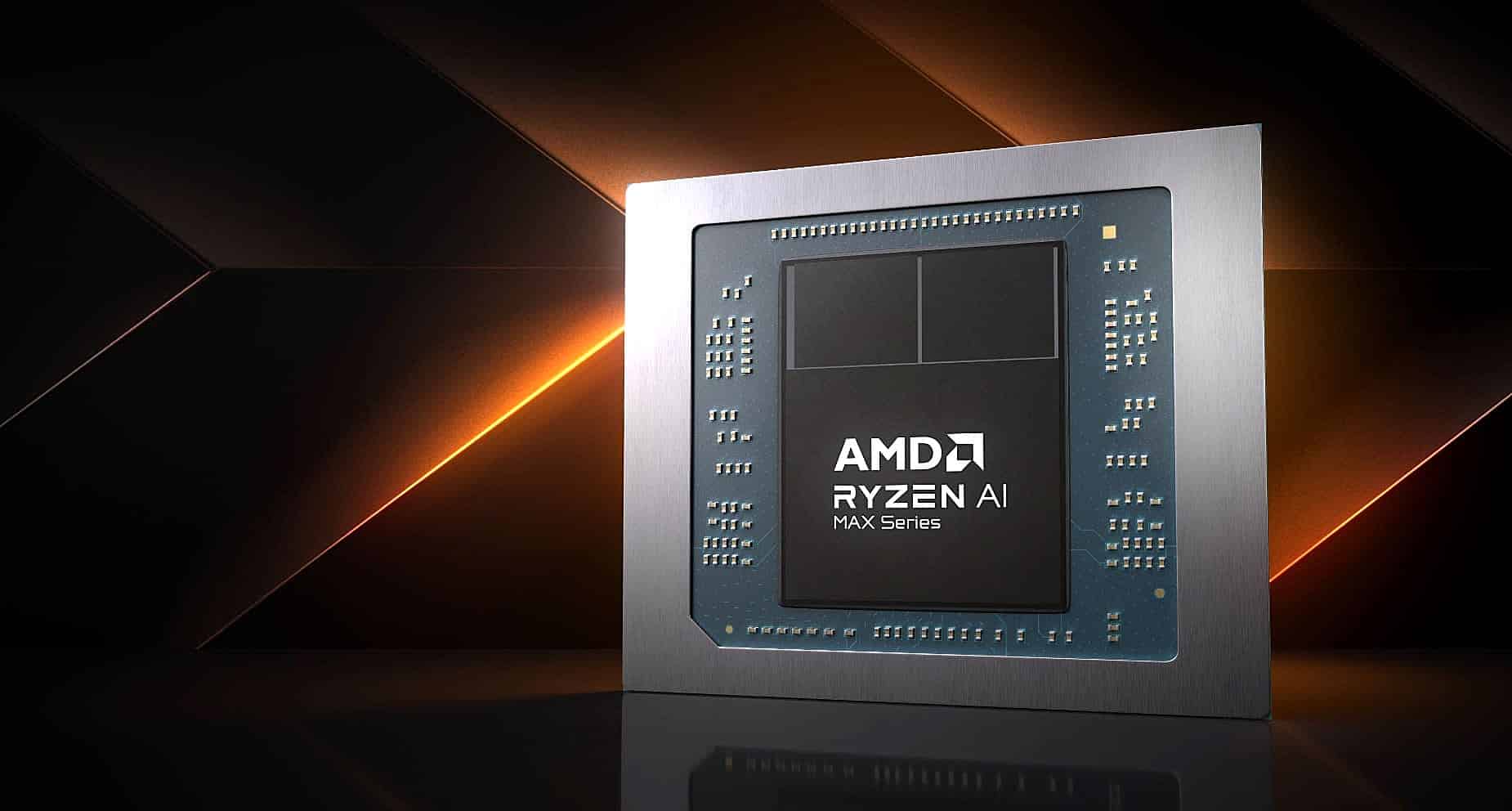
Artificial intelligence is no longer just a thing of the future – it is already moving into our everyday devices and business systems. AMD is making this very clear by introducing a new generation of AI chips at the CES 2026 conference. The company is openly demonstrating its ambitions: not only to keep up with Intel and Nvidia, but also to seriously adjust the balance of power in the market.

AMD’s move is seen as strategic. As more and more businesses and consumers realize that AI will become as commonplace a technology as the internet or smartphones, the question arises: who will manage this infrastructure?
The power of AI right on your computer
Until now, most complex AI tasks have been run in the cloud. This means delays, high server costs, and constant dependence on the internet. AMD wants to change this model.
As Yahoo Finance points out, AMD’s new AI chips are designed to perform many processes directly in the computer, which means faster performance, more privacy, and significantly more energy efficiency.
Speech recognition, image processing, generative AI tools, and intelligent assistance systems – all of these can become everyday functions that do not require constant cloud support. Users benefit in two ways: less waiting and more control over their data.
AI without permanent servers
AMD emphasizes that AI functions that run on-premises provide significant strategic benefits. Data is not sent to external servers as often, which reduces the risk of it being analyzed, stored, or lost. In addition, there is no need to pay for permanent cloud resources, and so-called “bottleneck” situations are avoided.
In other words, AMD is sending a clear message: PCs aren’t done yet. They’re evolving – and they’re going to be smarter than ever before.
A new era of AI in data centers
But AMD’s ambitions don’t stop with the consumer market. The companies have also revealed plans for the data center, an area where Nvidia has been dominating for some time.
The new chips are designed for heavy AI workloads: model training, complex calculations, and possibly language model performance. AMD aims to offer as much value as possible: more power, faster memory, and better energy efficiency.
Whoever controls the AI infrastructure will not only reap the profits but also technological dominance. AMD is clearly signaling that it does not want to remain a bystander.
The fight between Nvidia and Intel gains new momentum
The CES 2026 presentation shows that the race between chipmakers is moving to the next stage. Intel, Nvidia, and AMD are investing billions in an attempt to secure a position in the market, which could be the most important for the entire technology industry in the coming years.
Analysts note that AMD is not just aiming for higher performance. It is building a platform: solutions that work in both home computers and servers, and large data centers. Such a strategy can provide stable long-term growth.
If consumers choose AMD, developers will follow suit. And that means an ecosystem that could pose a serious challenge to competitors.
What does this mean for the simple consumer?
This presentation is not just a new technical specification. It marks the direction in which our everyday lives will move. Computers that work silently, quickly, and from a permanent cloud. Programs that “think” in real time. Greater privacy and lower costs of using AI.
AMD is sending a clear message: it promises to be one of the main players in this journey. This means that competition is very intense – and consumers usually win.
Is this the end or just the beginning?
With its new chips, AMD is entering the scene not as a follower, but as a technology trend creator. The market will react, competitors will respond, and we will witness one of the most exciting technology races in recent years.
One thing is clear: the pioneers of the AI era will be those who can combine power, privacy, and efficiency. AMD hopes to be in the middle of this front – both in consumer PCs and in massive server farms.
And it’s definitely not the end.
Credits:
Image:


