













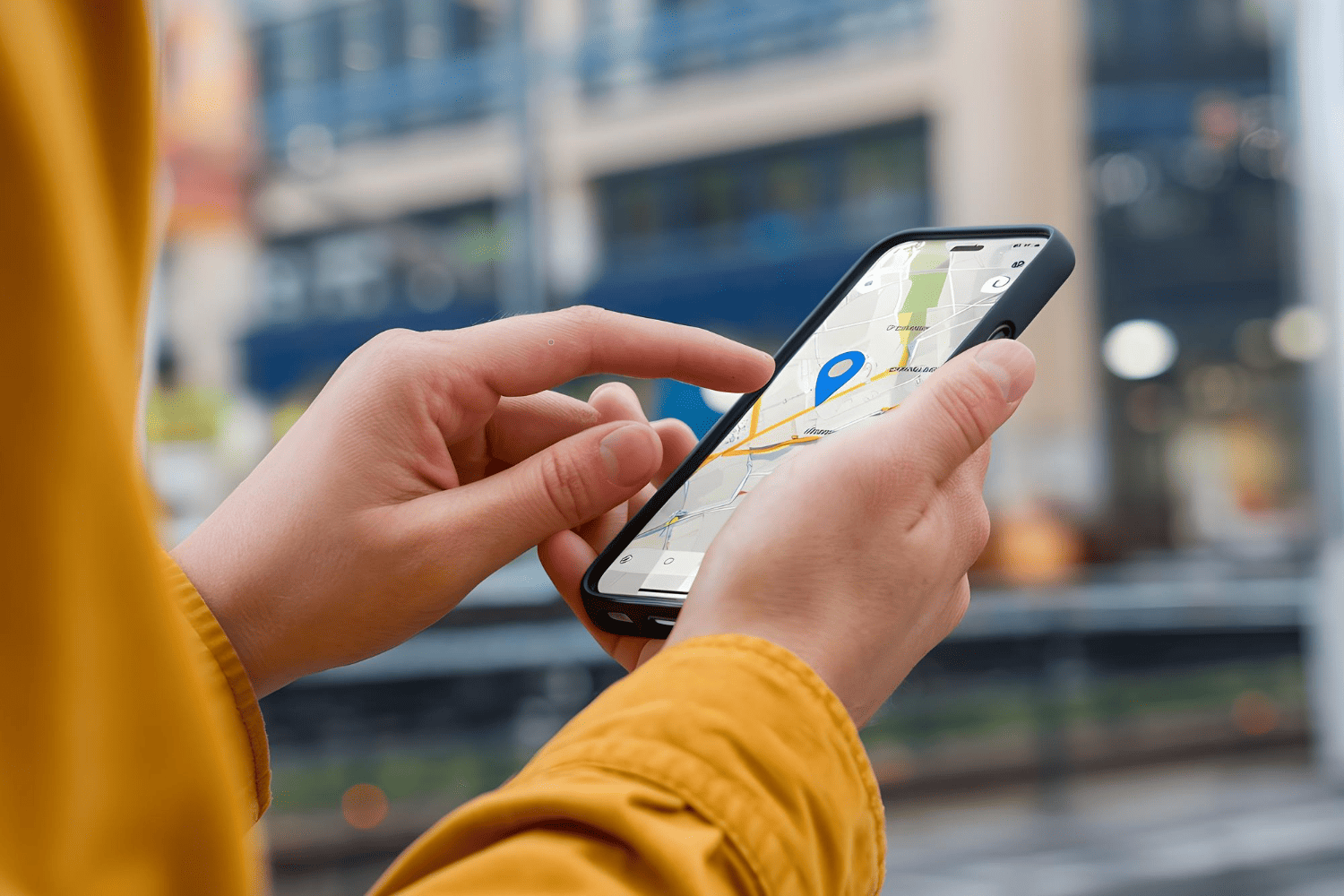
Starting yesterday, the Gemini feature in Google Maps will officially support walking and cycling, giving them the ability to talk hands-free for the first time.

Google describes Gemini in navigation as “like talking to a friend in the passenger seat,” and that idea translates surprisingly well when you’re on foot or on a bike, too. Instead of tapping at your phone, you can now ask conversational questions out loud while navigating and get real-time, context-aware answers based on Google Maps’ data.
For anyone who’s ever tried to text, search for information, or check directions while running (or worse, driving), this update is designed to eliminate the need to constantly tap the screen. Instead, you can just talk.
It’s essentially a conversational copilot who can now navigate your route on Google Maps and ask questions in natural language without leaving the navigation view.
This works similarly to talking to a passenger sitting next to you – except that the passenger can instantly receive real-time map data, business listings, and schedule information.

For walkers, Gemini essentially acts as a personal tour guide. As you explore your neighborhood, you can ask questions like “What neighborhood am I in?” or “What are the top-rated restaurants nearby?” Gemini will make recommendations along your current route, based on the latest local information from Maps.
Meanwhile, cyclists get hands-free assistance designed to help them stay focused and ride safely. You can ask practical questions during navigation, like “What’s my ETA?” or “When’s my next meeting?” without taking your hands off the handlebars. If you’re running late, Gemini can help you with quick tasks like sending a message. For example, just say, “Text Sarah, I’m 10 minutes late,” and it’ll take care of the rest.
There’s no separate download required – the experience lives directly inside Google Maps navigation.
- iOS: Live now worldwide wherever Gemini is supported
- Android: Rolling out broadly over the next month
- Modes supported: Driving (existing), Walking (new) and Cycling (new)
This expansion underscores Google’s broader push to integrate AI assistants into everyday mobility, rather than keeping them confined to separate chat apps. Instead of opening the AI assistant and then switching back to Maps, the assistant now shows you exactly where decisions are being made – even while you’re on the move.
Credits:
Image: