










Google will allow you to delete personal information from search
Google expands tools to let users remove sensitive data about themselves from search results.


On Safer Internet Day, Google unveiled updated tools for “Results About You” and the removal of explicit images provided without consent.

In an updated statement Tuesday, the company said its “Results About You” tool already allows users to remove search results that include their phone number, email address or home address, and can now also be used to request the removal of results that include information like a driver’s license, passport or social security number.
You can access the tool in the Google app by tapping your Google account photo and selecting “Results about you.” If it’s your first time using the tool, you need to click “Get started” and then add the personal contact information you want to monitor. You’ll then be prompted to add your government ID numbers. Existing users can add their ID numbers and select which ones they want to monitor.
Once you verify your information, Google will automatically monitor search results and notify you if it finds results that contain your information. Google notes that removing this information from search does not completely remove it from the web, but doing so may keep your information private.
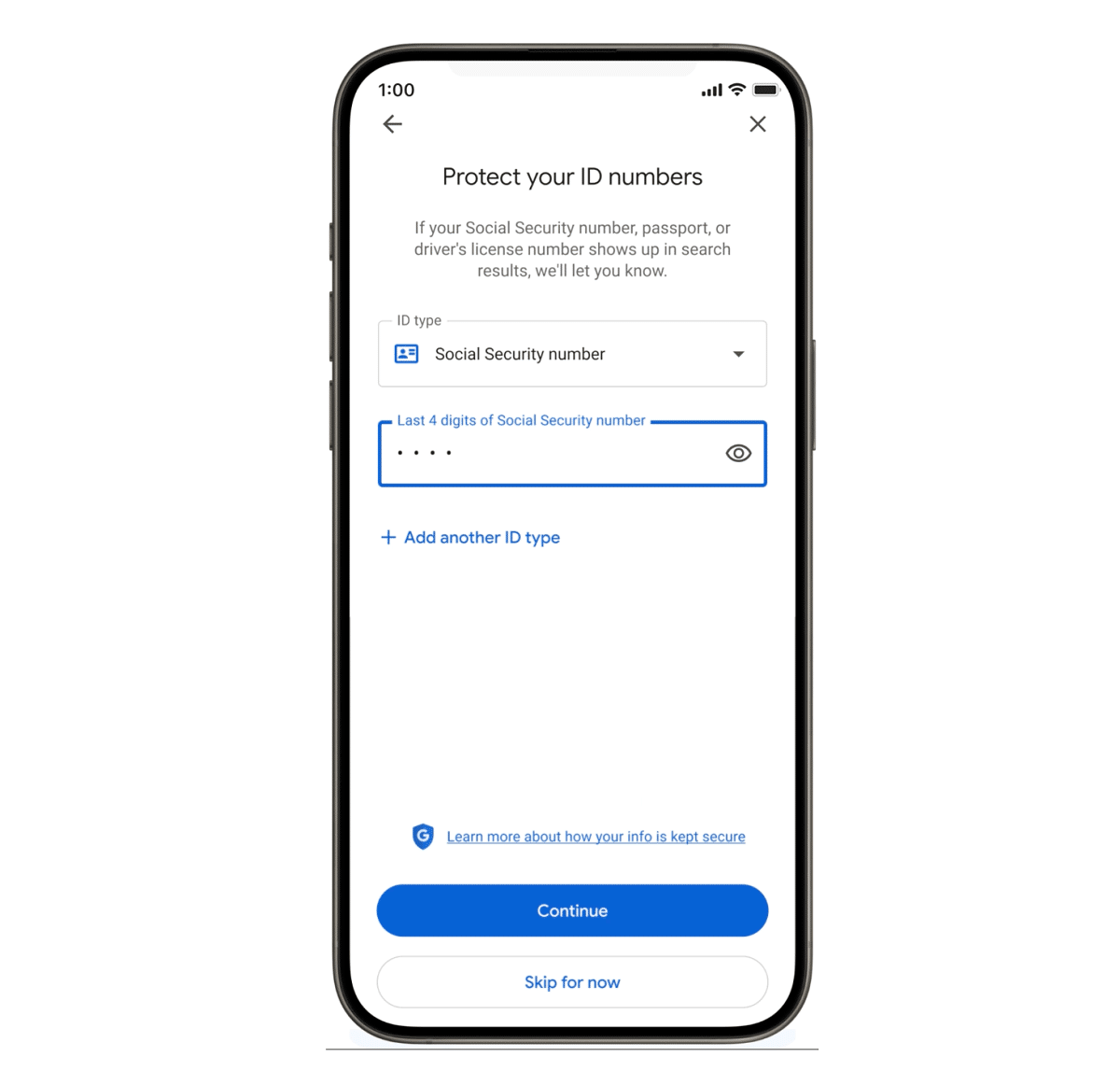
The update will be rolling out in the US in the coming days, with Google planning to roll it out to other regions in the future.
The tech giant also announced that it’s making it easier to request the removal of non-consensual explicit images on Search. Now, users just have to click on the three dots on an image, select “remove result,” then tap “It shows a sexual image of me.”
Additionally, you no longer need to report images one by one, as you can now select and submit requests for multiple images from Search results using a single form. Users can also track the status of all requests in one place within the “Results about you” hub.
“We understand that removing existing content is only part of the solution,” Google wrote in its blog post. “For added protection, the new process allows you to opt in to safeguards that will proactively filter out any additional explicit results that might appear in similar searches.”
Credits:
Image: