














Amazon founder Jeff Bezos predicts that with the advancement of AI, millions of people will move to space, and this is not an off-the-cuff statement.
The rare public appearance of the world’s second-richest person has caused a stir in the technology and space industries, especially given that his resume directly challenges his rival Elon Musk’s Mars colonization plan. The Financial Times reports.

According to TechCrunch: Speaking with John Elkann, a scion of Italy’s Agnelli dynasty, Bezos, who also founded rocket company Blue Origin, insisted people will be living in space “mostly because they want to,” and that robots will handle the grunt work, while vast AI data centers float overhead.
The statement is a bit like Bezos trying to outdo his space rival. Elon Musk has been predicting for years that humans will colonize Mars, and has said that by 2050, which is basically right around the corner, a million people could live there. Maybe the two millionaires are losing touch or know something, the rest of us refreshing “Zillow”, don’t.
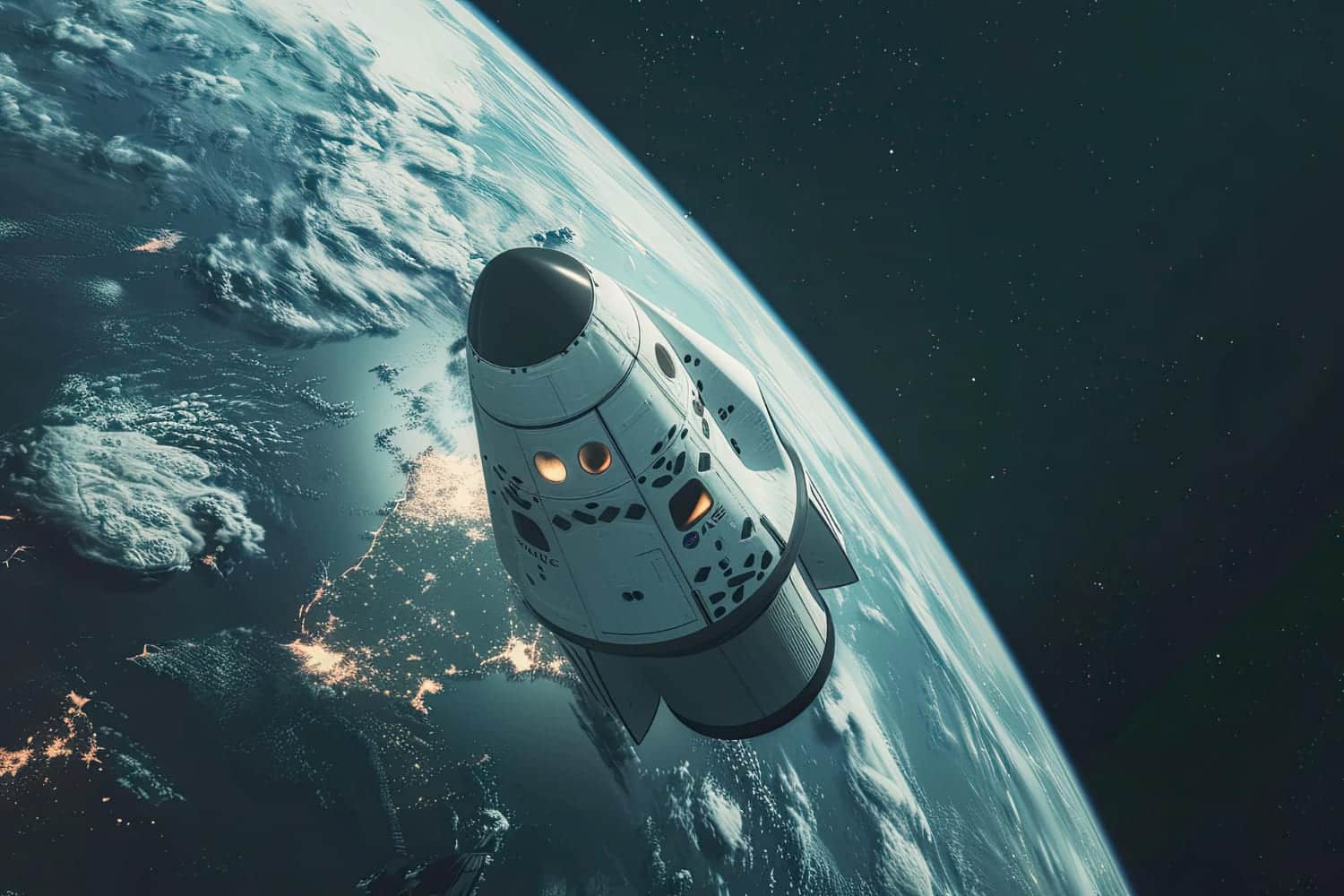
But Bezos isn’t just betting on space tourism. His comments hint at a fundamental shift in how we view life in space. While Musk focuses on Mars as humanity’s backup planet, Bezos envisions space as a lifestyle choice – luxury orbital communities for those who can afford to escape Earth’s gravity.
According to the billionaire, the audience took these words with interest and silent applause, underscoring growing confidence in space horizons and the role of artificial intelligence in future projects.
“There has never been a better time to be excited about the future,” Bezos reportedly told the Turin audience, though his optimism contrasts sharply with growing concerns about AI safety, climate change, and wealth inequality.
According to The Tech Buzz: The space forecast isn’t entirely unfounded. Blue Origin is developing its own suborbital spaceship, New Shepard, and is planning a larger orbital rocket, New Glenn. The company recently announced a partnership for its commercial space station, Orbital Reef, which could house up to 10 people by 2030.

Meanwhile, the broader commercial space industry is experiencing unprecedented growth. Companies like SpaceX, Virgin Galactic, and Axiom Space are launching into orbit on a regular basis, rather than as an exception. NASA’s Artemis program aims to establish a permanent lunar base, and private companies are planning to build manufacturing facilities in orbit.
But millions of space residents within decades? That’s a massive leap from today’s reality, where fewer than a dozen people live in space at any given time aboard the International Space Station. The logistics alone – life support systems, radiation protection, sustainable food production – remain enormous challenges that current technology hasn’t solved.
This prediction also raises questions about who will gain access to these orbital communities. Bezos’ vision of people living in space “because they want to” sounds appealing, but living in space is likely to remain expensive for the foreseeable future.
Credits: