










Newly discovered ‘Michelangelo Sistine Chapel’ sketch up for auction
The drawing's connection to the Sistine Chapel gives it extraordinary scientific value.


Michelangelo is not usually the kind of artist you’d stumble across during a routine spring cleaning, but that’s exactly what happened when a small bequest turned out to be anything but modest.
A red chalk study of a single foot is now attributed to Michelangelo Buonarroti and is heading to Christie’s New York, where the modest piece of paper is set to become one of the most anticipated items of the early 2026 auction.

It’s rare for the art market to say it’s found a new Sistine Chapel exhibit. This time, the pun almost writes itself: the newly discovered leg is taking a pretty big step.
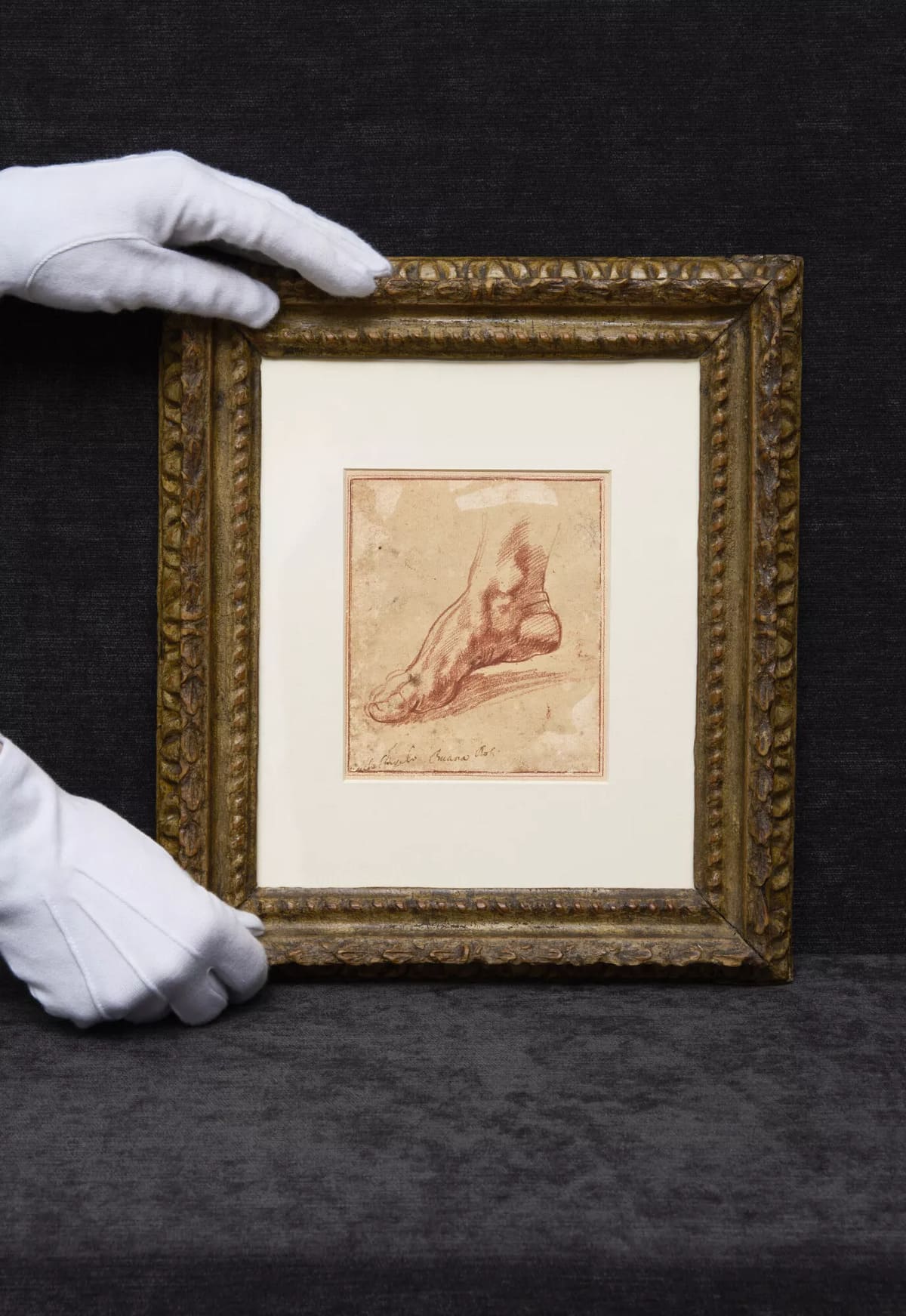
The drawing, dated to around 1511-1512, depicts the right foot of the Libyan Sibyl, one of the most impressive figures on the Sistine Chapel ceiling. Painted in Michelangelo’s signature red chalk, the studio shows the artist testing the angle, tension and muscles before painting the figure in the fresco.
Christie’s experts say the faint inscription “Michelangelo Bona Roti” matches markings found on authentic drawings and helped solidify the attribution. The clarity and anatomical precision of the sheet suggest that Michelangelo methodically prepared the Sibyl’s spinning pose.
The painting’s connection to the Sistine Chapel gives it extraordinary scholarly value. The Libyan Sibyl, which occupies a prominent position at the east end of the chapel, is renowned for its athletic, sinuous form, a typical example of Michelangelo’s anatomical mastery.
Christie’s will offer the work on February 5, 2026, and it is estimated to be worth between $1.5 million and $2 million. The sheet gives fans a rare glimpse into Michelangelo’s iterative thinking, revealing how he perfected the Sibyl’s foot before transferring the final form onto wet plaster.
Even after half a millennium, the Italian Renaissance polymath still finds ways to surprise.
Credits: